Speed to lead: building a CRM workflow that responds in minutes
The first business to respond often wins the deal. Here is how to centralize leads, route them automatically, and follow up in minutes without hiring more people.
When someone fills in a form or calls a business, they are usually comparing a few options at the same time. The business that responds first and helpfully has a real advantage. Yet many teams take hours or even a day to reply, simply because leads arrive in too many places and nobody knows whose turn it is.
Here is how we build speed-to-lead workflows for service businesses, care providers, and sales teams.
1. Centralize every lead source
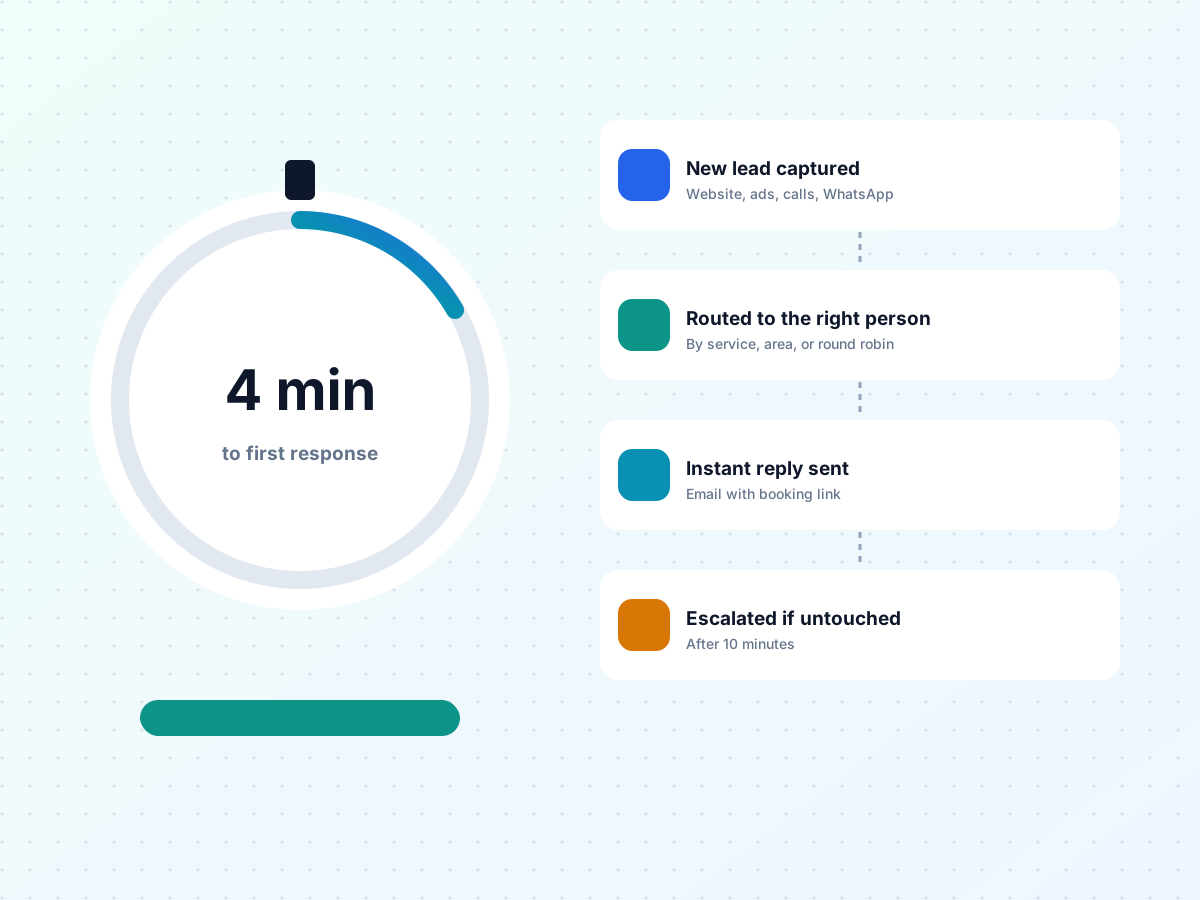
List every way leads reach you: website forms, phone calls, live chat, Facebook and Instagram lead forms, Google Ads lead forms, marketplace or portal emails, and WhatsApp messages. Connect each one to a single CRM using native integrations, Zapier or Make, email parsing, or webhooks.
Until every lead lands in one place, automation just moves the chaos around.
2. Capture only what you need
Ask for name, contact details, and the one or two questions that decide who should respond. Shorter forms get more submissions, and collecting less personal data is better for privacy too. For sensitive industries like care and health, avoid asking for medical details on the website.
3. Route with simple, visible rules
Common routing rules include:
- By service: new projects to sales, support questions to the support inbox, job applications to hiring.
- By location: leads go to the branch or agent covering that area.
- Round robin: leads rotate evenly among available team members.
Alert the assigned person instantly by email, SMS, or a chat message with all the lead details in one view.
Automation should handle the first five minutes so your people can focus on the conversation that follows.
4. Send a helpful first response automatically
An instant reply confirms the request arrived, sets expectations for when a person will respond, and offers a next step such as booking a call. Keep it personal and short, and sign it from a real person.
5. Escalate anything left untouched
If a lead is not contacted within ten or fifteen minutes during business hours, notify a manager or reassign it. After-hours, a missed-call text-back message keeps the lead warm until morning.
6. Nurture leads that are not ready yet
Not everyone is ready to buy today. Enroll them in a short, useful email sequence and review the list monthly. Many deals close weeks after the first inquiry.
Measure it
Track average time to first response, contact rate, and conversion from lead to appointment. We helped a real estate brokerage cut first response time from nine hours to four minutes using this approach.
Want a workflow like this for your business? Book a free strategy call.